
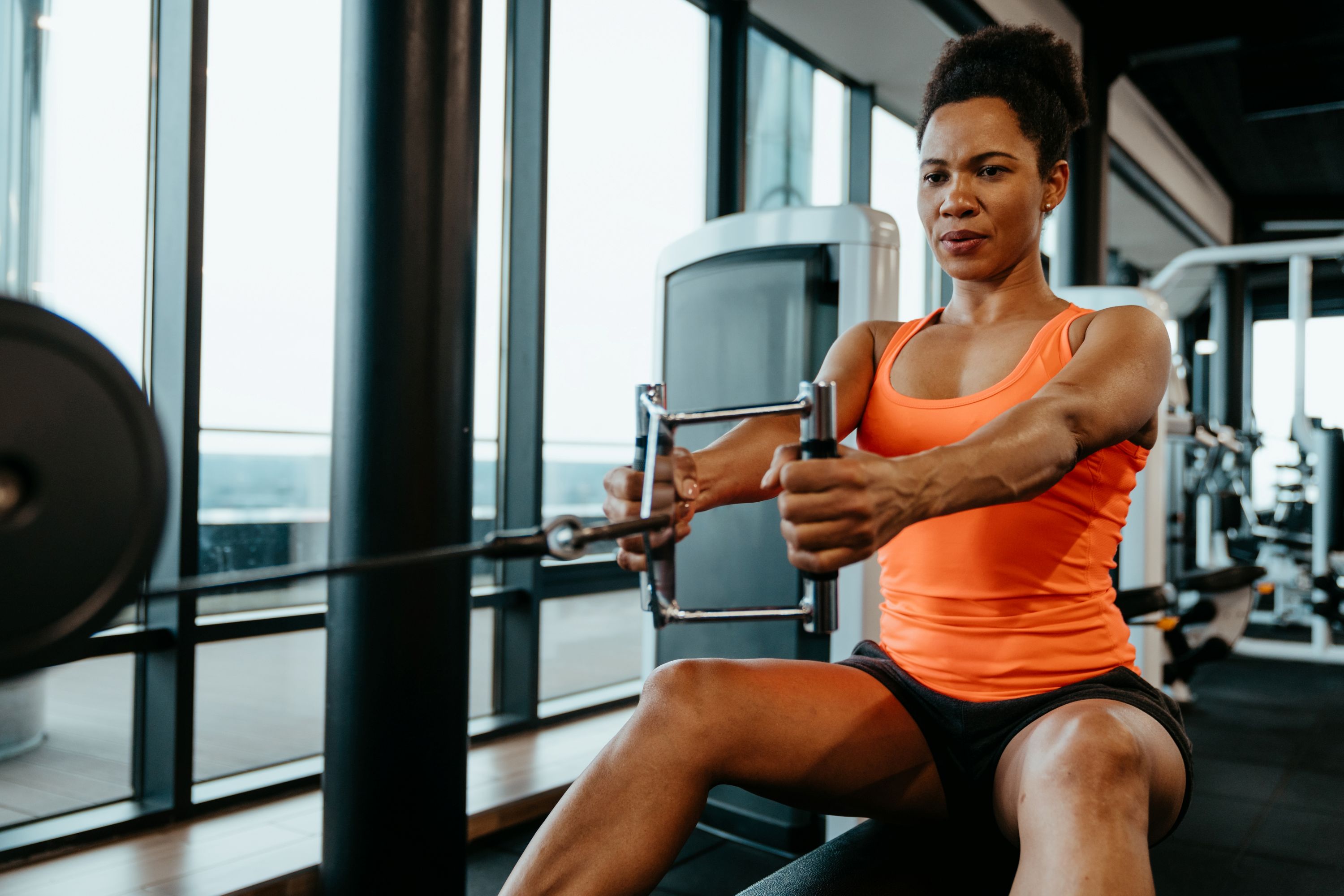
The erector spinae are performing an isometric contraction during a seated row - https://brookbushinstitute.com/glossary/isometric-contraction
The Brookbush Institute continues to enhance education with a glossary that is more than just definitions. Examples, common questions, and so much more!
The word is formed from two parts: "iso" (equal) and "metric" (measure). That is, the force produced by the muscle is equal to the external load.”
— Dr. Brent Brookbush, CEO of Brookbush Institute
NEW YORK, NY, UNITED STATES, February 21, 2025 /EINPresswire.com/ -- - Excerpt from the term: Isometric Contraction
- Related Article: The Best Weight Lifting Tempo: Maximum Velocity Concentrics
- Related Course: Lesson 22: Introduction to Movement Assessment and Analysis
DEFINITION
Isometric Muscle Contraction: A type of muscle contraction in which activation of motor units and the production of
- Etymology: The word is formed from two parts: "iso" (equal) and "metric" (measure). That is, the force produced by the muscle is equal to the external load.
KEY CHARACTERISTICS
- Muscle fibers shorten while generating tension.
- Produces acceleration in opposition to the external resistance (e.g., lifting a weight).
CONTRACTION TYPES
- Shortening Contraction: Concentric contraction
- Same-length Contraction: Isometric contraction
- Lengthening Contraction: Eccentric contraction
EXAMPLES OF ISOMETRIC CONTRACTIONS
- Biceps Curl (Shoulder): When performing a bicep curl, if the arm remains still, the deltoid is performing an isometric contraction.
- Squat (Trunk): During a squat, the lower extremity moves, but the trunk muscles have to maintain an isometric contraction.
- Push-Up (Trunk): During a push-up, the upper extremity moves, but the trunk muscles have to maintain an isometric contraction.
- Seated Row (Erector Spinae): During a seated row, the arms and scapula move, but the erector spinae have to perform an isometric contraction to keep the torso upright.
- Core Exercises: Core exercises like planks, side-planks, quadrupeds, and chop patterns all challenge the core/trunk muscles to maintain an isometric contraction against resistance from various directions.
EXAMPLE OF USE IN PRACTICE
Tempo Notation and Recommendations:
Repetition (rep) tempos are generally notated in the following format "(3:1:2)". The numbers are seconds (sec.) unless otherwise indicated. Each number corresponds to a phase of contraction in the following order: "eccentric: isometric:..

No comments:
Post a Comment